
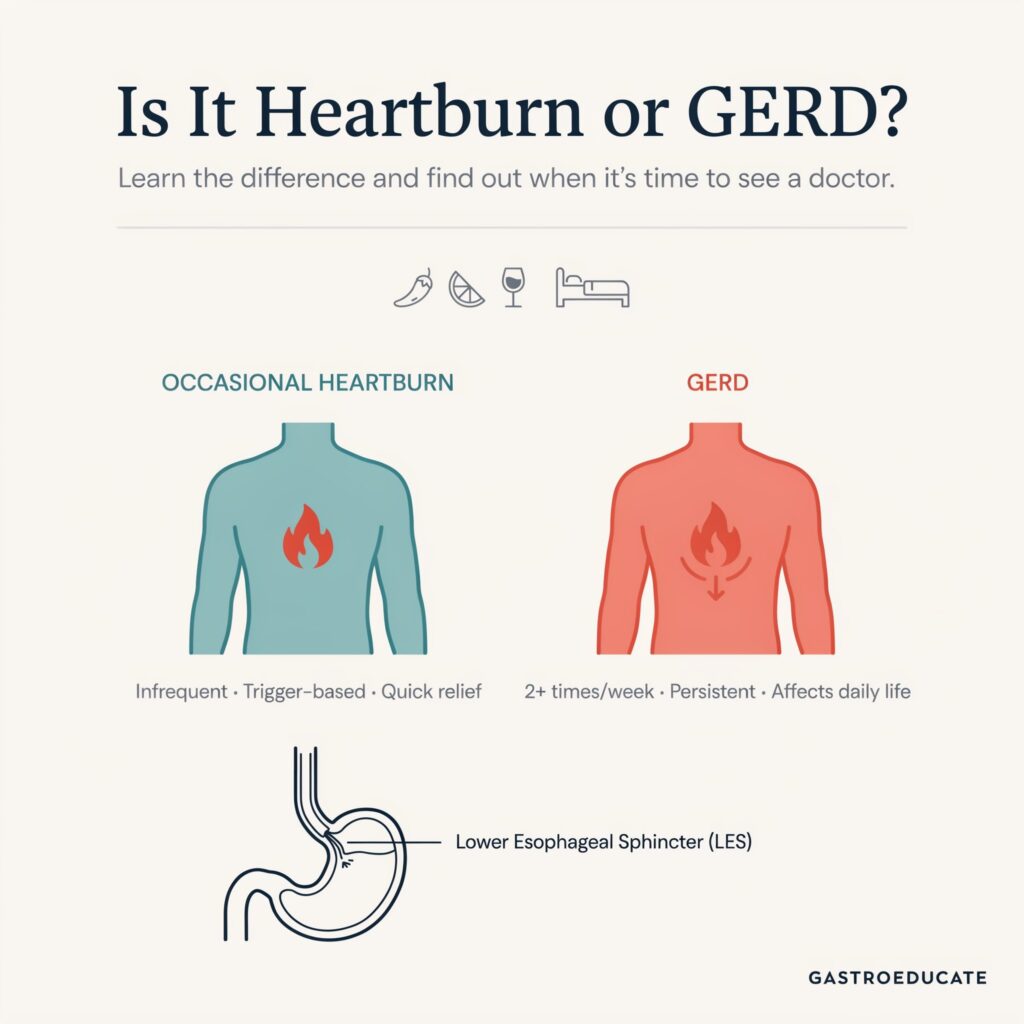
Learn the difference and find out when it's time to see a doctor.
We’ve all been there: you finish a spicy meal or a late-night snack, and suddenly, there’s that familiar burning sensation in your chest. For most people, heartburn is an occasional inconvenience. But when it becomes frequent or starts affecting sleep, meals, or daily activities, it may be a sign of gastroesophageal reflux disease (GERD).
Knowing the difference between a one-off episode and GERD is the first step toward improving your comfort, your sleep, and your overall quality of life.
What is Occasional Heartburn?
Think of occasional heartburn as a temporary disturbance in digestion. It happens when stomach acid briefly flows back into the esophagus, often triggered by specific habits or foods.
The common features:
- The “Why”: Linked to triggers like spicy foods, citrus, alcohol, or lying down after a large meal
- Frequency: Infrequent—once in a while
- Management: Usually improves quickly with antacids or simple lifestyle adjustments
For most people, this is harmless and manageable.
What is GERD?
GERD is more than just occasional heartburn. It is a chronic condition in which the lower esophageal sphincter (LES)—the valve that prevents stomach contents from flowing backward—does not function properly.
GERD is typically defined by frequent reflux symptoms or symptoms that significantly affect daily life.
The common features:
- Frequency: Symptoms occur regularly (two or more times per week)
- Persistence: They linger or gradually worsen
- Impact: They begin to affect sleep, diet, and daily activities
It’s Not Just a Burning Chest
GERD doesn’t always present as classic heartburn or regurgitation of sour or bitter-tasting fluid into the mouth. In fact, many patients experience less obvious symptoms.
You might notice:
- Regurgitation of sour or bitter-tasting fluid into the mouth
- Chronic cough or frequent throat clearing
- Hoarseness, especially in the morning
- A sensation of a lump in the throat (globus)
- A bitter or sour taste upon waking
These “silent” symptoms are often overlooked but can be related to ongoing reflux.
At a Glance: The Comparison
Here's a quick summary of the key differences:
| Feature | Occasional Heartburn | GERD |
|---|---|---|
| Frequency | Rare / Infrequent | ≥ 2 times per week |
| Triggers | Specific (e.g., spicy food) | May occur without clear triggers |
| Duration | Short-lived | Persistent |
| Daily Life | Minimal impact | Affects sleep and diet |
| Treatment | Occasional OTC relief | Often requires medical evaluation |
Simple Steps That May Help Reduce Reflux
While medical treatment may be necessary for GERD, certain lifestyle habits can meaningfully reduce symptoms:
- Avoid large meals close to bedtime
- Avoid lying down for at least 2-3 hours after eating
- Maintain a healthy weight
- Limit foods that consistently trigger symptoms
- Elevate the head of the bed if nighttime symptoms occur
- Avoid smoking
When to Call Your Doctor
If you find yourself relying on over-the-counter medications regularly, it’s time to look deeper. Seek medical advice if you experience:
- Difficulty swallowing
- Unexplained weight loss
- Persistent vomiting
- Iron deficiency anemia
- Chest pain different from your usual reflux
- Symptoms that disrupt sleep or affect quality of life
What Happens If GERD Goes Untreated?
Ongoing acid exposure can irritate and damage the lining of the esophagus. Over time, persistent acid reflux can cause inflammation of the esophagus (esophagitis) and, in some individuals, increase the risk of complications such as strictures or Barrett's esophagus.
The good news is that, once identified, GERD is very manageable with the right combination of lifestyle changes and medical therapy.
Occasional heartburn is common and usually not a cause for concern. GERD, however, is a chronic condition that deserves attention.
If you're experiencing frequent or persistent reflux symptoms, book a consultation at Healthbay. Together, we can determine whether GERD is the cause and develop a personalized treatment plan to relieve symptoms, reduce the risk of complications, and improve your quality of life.
This article is intended for general educational purposes only and does not constitute personal medical advice. Please consult a qualified gastroenterologist to discuss your individual symptoms, risk factors, and health needs.