
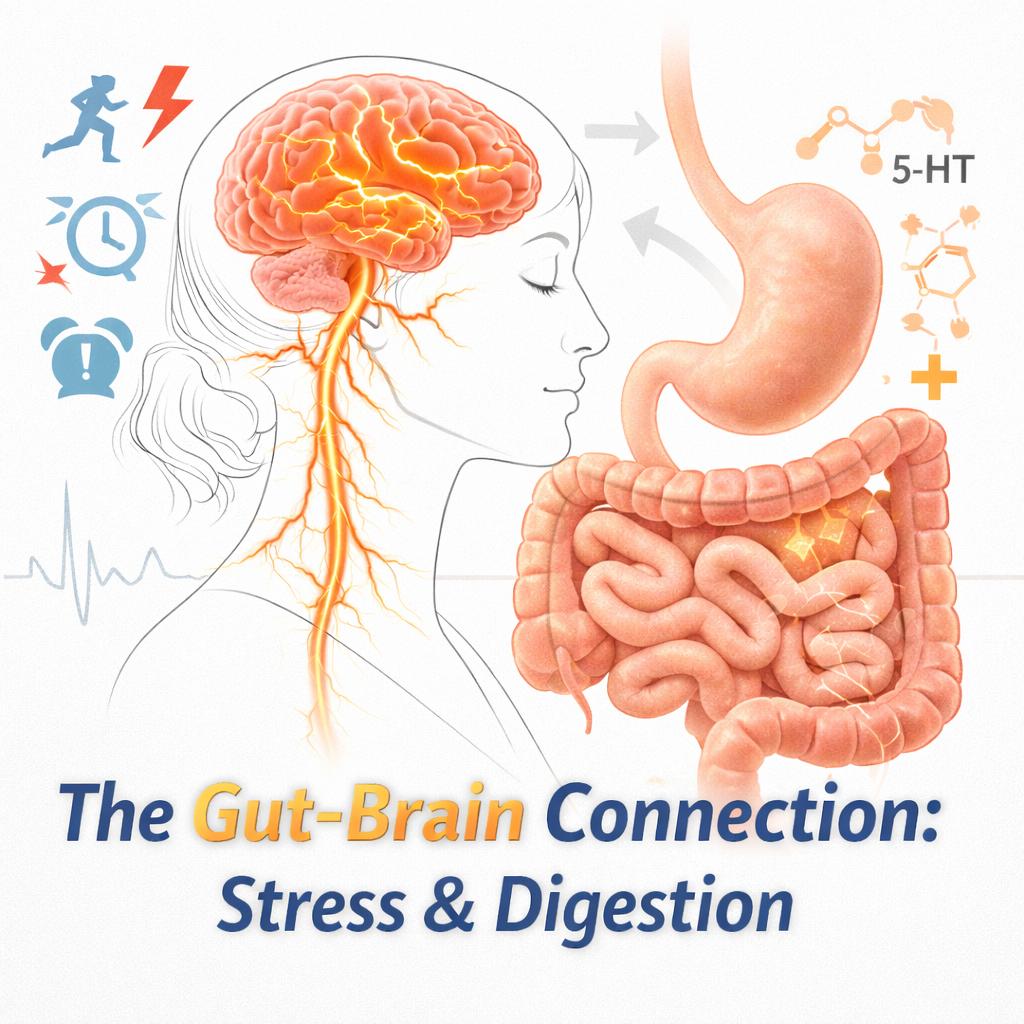
The Stress Connection: How Your Mind Shapes Your Digestion
Have you ever felt a “pit” in your stomach before a big presentation or sudden urgency when you’re anxious? This isn’t just in your head; it’s a physical reality of how your body is wired.
As a gastroenterologist, I often see patients with conditions like IBS, bloating, or reflux whose symptoms flare during stressful periods. To manage your gut health effectively, you first have to understand a powerful communication pathway, known as the gut-brain axis.
1. What is the Gut-Brain Axis?
Your gut and brain are in constant conversation through a network of nerves, hormones, and biochemical signals.
- The Vagus Nerve: Think of this as the main data cable connecting your brain to your internal organs. It transmits signals about the state of your gut to your brain and vice versa.
- The “Second Brain”: Your gut contains over 100 million neurons—more than your spinal cord. This is the enteric nervous system (ENS), which can control digestion semi-independently.
- Serotonin: While known as a “brain chemical,” about 95% of your serotonin is actually produced in your gut. It regulates not just mood, but the actual muscle contractions that move food through your system.
2. How Stress “Hijacks” Your Digestion
When you experience stress, your brain activates the “fight-or-flight” response. To prepare for a perceived threat, your body diverts energy away from “non-essential” functions like digestion.
- Altered Motility: Stress can cause your stomach to empty more slowly (leading to bloating or nausea) while causing your large intestine to contract faster (leading to urgency or diarrhea).
- Increased Sensitivity: Stress lowers your “pain threshold,” making your gut more sensitive to normal sensations like gas or digestion—a phenomenon called visceral hypersensitivity.
- Impact on Gut Integrity: Cortisol and other stress-related hormones can physically weaken the intestinal barrier. This can increase intestinal permeability, which may contribute to low-grade inflammation and altered gut function.
3. Breaking the Vicious Cycle
The gut-brain axis is a two-way street. Chronic digestive symptoms can cause anxiety, which in turn makes the gut even more reactive. To find relief, we often recommend “mind-gut” strategies:
- Diaphragmatic Breathing: “Belly breathing” stimulates the vagus nerve, signaling your body to move out of fight-or-flight and into “rest and digest” mode.
- Mindful Eating: Simply slowing down and chewing thoroughly can prevent the stress response from staying activated during meals.
- Physical Activity: Regular exercise helps lower cortisol and improves the natural rhythm of your bowel movements.
When to See a Specialist
While occasional stress-related “butterflies” are normal, if symptoms persist, or if you experience unexplained weight loss, changes in bowel habits, or blood in your stools, a gastroenterologist can help determine whether stress is the main driver or whether an underlying condition needs treatment.
By addressing both the physical symptoms in your gut and the stress in your mind, we can work together to restore balance to your entire system.
If you are struggling with persistent digestive symptoms, a consultation can help clarify the cause and guide the most appropriate treatment.