
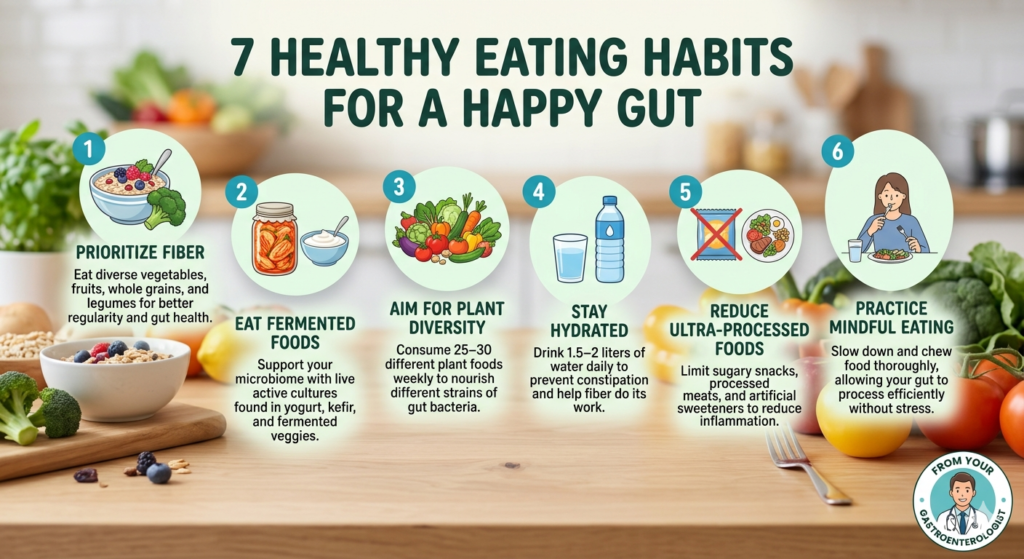
7 Healthy Eating Habits for a Happy Gut
If you’ve ever felt sluggish, bloated, or moody after meals, your gut may be trying to tell you something. As a gastroenterologist, I often tell my patients something simple but powerful: a healthy gut starts on your plate.
Your digestive system does much more than process food. It influences your immune system, your energy levels, your metabolism, and even your mood. At the centre of this system is your gut microbiome — the trillions of bacteria living in your intestines that influence overall health.
The good news? Small, consistent eating habits can significantly improve your digestive health.
-
1. Prioritize Fiber — But Do It Smartly
One of the most effective ways to improve gut health naturally is by increasing dietary fiber. It:
- Feeds beneficial gut bacteria
- Improves bowel regularity
- Reduces inflammation
- Helps prevent constipation and diverticular disease
Best sources:
- Vegetables (broccoli, carrots, spinach)
- Fruits (berries, apples, pears)
- Legumes (lentils, chickpeas)
- Whole grains (oats, quinoa, brown rice)
- Nuts and seeds
Tip: Increase fiber gradually and drink plenty of water to minimize bloating.
-
2. Feed Your Microbiome with Fermented Foods
Fermented foods contain live beneficial bacteria (probiotics) that can support gut balance. Examples include yogurt with live cultures, kefir, sauerkraut, kimchi, and miso.
Not all fermented foods are equal — look for products that state “contains live active cultures.”
-
3. Eat a Diverse Diet
Research shows that microbiome diversity is linked to better metabolic and immune health. Each colour provides different phytonutrients that nourish different strains of gut bacteria.
Aim for: 25–30 different plant foods per week and a variety of colourful fruits and vegetables.
The more diverse your diet, the more resilient your microbiome.
-
4. Stay Hydrated for Optimal Digestion
Food gets all the attention, but staying hydrated is just as important. Water:
- Helps fiber create "bulk," which is what physically moves waste through the colon
- Supports digestive enzyme function
- Prevents constipation
For most adults, aiming for 1.5–2 litres of water per day is a good general target, adjusting for climate and activity level.
-
5. Reduce Ultra-Processed Foods
Highly processed foods can negatively affect gut bacteria and increase inflammation. Common examples include sugary snacks, processed meats, artificial sweeteners (in excess), and packaged fast foods.
You don’t have to give up treats — just keep them occasional.
-
6. Eat Mindfully
Digestion starts in the brain. If you eat while stressed or "on the run," your body stays in "fight or flight" mode, diverting blood away from the gut. Slow down. Chew thoroughly. Let your gut do its job.
-
7. Respect Your Circadian Rhythm
Late-night heavy meals can worsen reflux, disrupt gut motility, and affect metabolic health. Try to eat dinner at least 2–3 hours before bedtime, and keep your meal times consistent each day.
The Bottom Line
A happy gut is not about a “perfect” diet. It’s about consistent, balanced habits:
- ✔ Fiber-rich foods
- ✔ Plant diversity
- ✔ Fermented foods
- ✔ Proper hydration
- ✔ Fewer ultra-processed products
- ✔ Mindful eating
Your gut works 24/7 for you. Nourish it well — and your body will thank you with better digestion, stronger immunity, and improved overall wellbeing.