
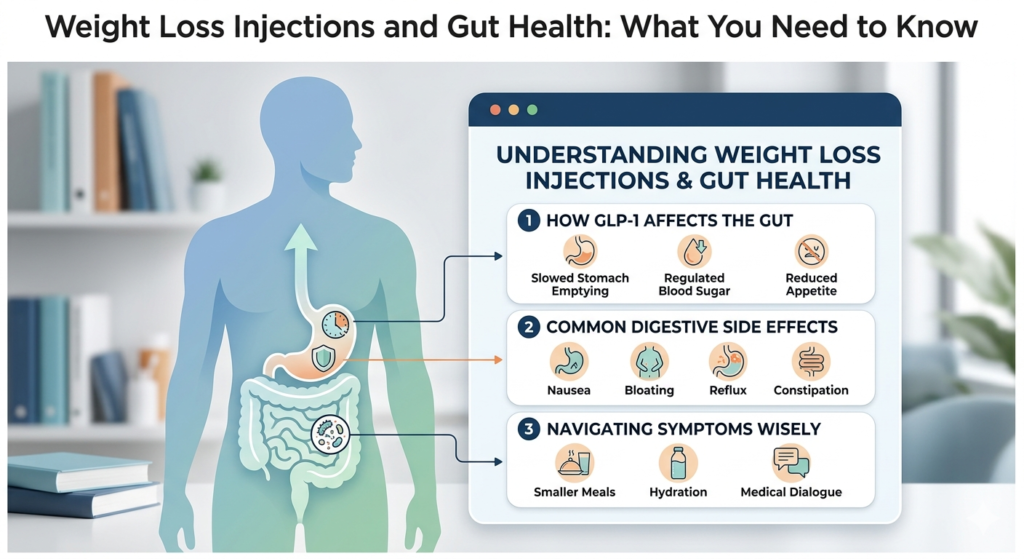
Ozempic — along with Wegovy, Mounjaro, and other GLP-1 receptor agonists — has become one of the most talked-about medications in modern medicine. Originally developed for type 2 diabetes, these medications are now widely used for weight management and metabolic health.
Many patients are surprised by how strongly these medications affect the digestive system. Nausea, bloating, reflux, constipation, and early fullness are extremely common — and understanding why they happen can make treatment safer and easier to tolerate.
How GLP-1 Medications Affect the Digestive System
These medications work by mimicking a natural gut hormone called GLP-1 (glucagon-like peptide-1), which is released after eating. This hormone helps:
- Regulate blood sugar
- Reduce appetite
- Promote a feeling of fullness
- Slow stomach emptying
GLP-1 medications intentionally slow gastric emptying. Food remains in the stomach longer, which increases fullness and reduces appetite. This is one of the main reasons these medications help with weight loss by increasing satiety and reducing calorie intake. However, the same mechanism explains why gastrointestinal side effects are common, particularly in the first weeks of treatment.
When Symptoms Go Beyond “Expected”
While most side effects are manageable, gastroenterologists are paying attention to more significant digestive complications.
- Gastroparesis-like Symptoms: Some patients develop persistent delayed gastric emptying. Symptoms may include ongoing nausea, early fullness, or vomiting undigested food.
- Intestinal Blockage (Ileus): In 2023, the FDA updated Ozempic’s safety label to include ileus (intestinal obstruction) as a reported post-marketing side effect.
- SIBO Concerns: There is emerging discussion about a possible link to small intestinal bacterial overgrowth (SIBO). Slowed gut motility can allow bacteria to accumulate, though current evidence is limited.
- Persistent vomiting or inability to tolerate liquids
- Severe or worsening abdominal pain
- No bowel movements for several days
- Vomiting undigested food repeatedly
- Signs of dehydration
Who Should Be More Cautious?
Extra care is recommended for patients who already have digestive disorders, as these medications can worsen existing conditions:
- Pre-existing gastroparesis: Can significantly worsen symptoms of an already-delayed stomach.
- Severe acid reflux (GERD): Delayed emptying increases the time acid has to reflux into the esophagus.
- Chronic constipation: Slowed motility can lead to more serious blockages.
- Irritable bowel syndrome (IBS): Gut sensitivity can make the adjustment period more uncomfortable.
Important: Procedures and Anesthesia
Because GLP-1 medications delay stomach emptying, they can increase the risk of retained stomach contents during sedation or anesthesia. If you are scheduled for an endoscopy, colonoscopy, or surgery, you may be advised to temporarily stop the medication. Always discuss this with your medical team beforehand.
Practical Tips for Digestive Comfort
Managing discomfort comes down to portion size and timing:
- The 20-Minute Rule: Stop eating at the first sign of fullness; your brain is often 20 minutes behind your stomach.
- Eat Small & Frequent: Five or six small meals are better tolerated than three large ones.
- Sip, Don't Gulp: Hydration is essential, but it is better to sip water between meals. Large amounts of liquid with food can lead to painful distension.
- Avoid "Trigger" Fats: Fried foods stay in the stomach even longer, increasing the risk of nausea.
- Stay Upright: Avoid lying down for 1–2 hours after meals to help the stomach empty more effectively.
The Bottom Line
GLP-1 medications are transformative for many, but they are not "just weight loss injections"—they actively change how your gut functions. The best results come when your journey includes a dialogue between your prescribing doctor and your GI specialist.
This article is intended for general educational purposes only and does not constitute personal medical advice. Please consult a qualified gastroenterologist to discuss your individual risk factors and symptoms.